Why Singaporeans Are More Concentrated Than They Realise
Familiarity feels like safety. In investing, it often isn’t.
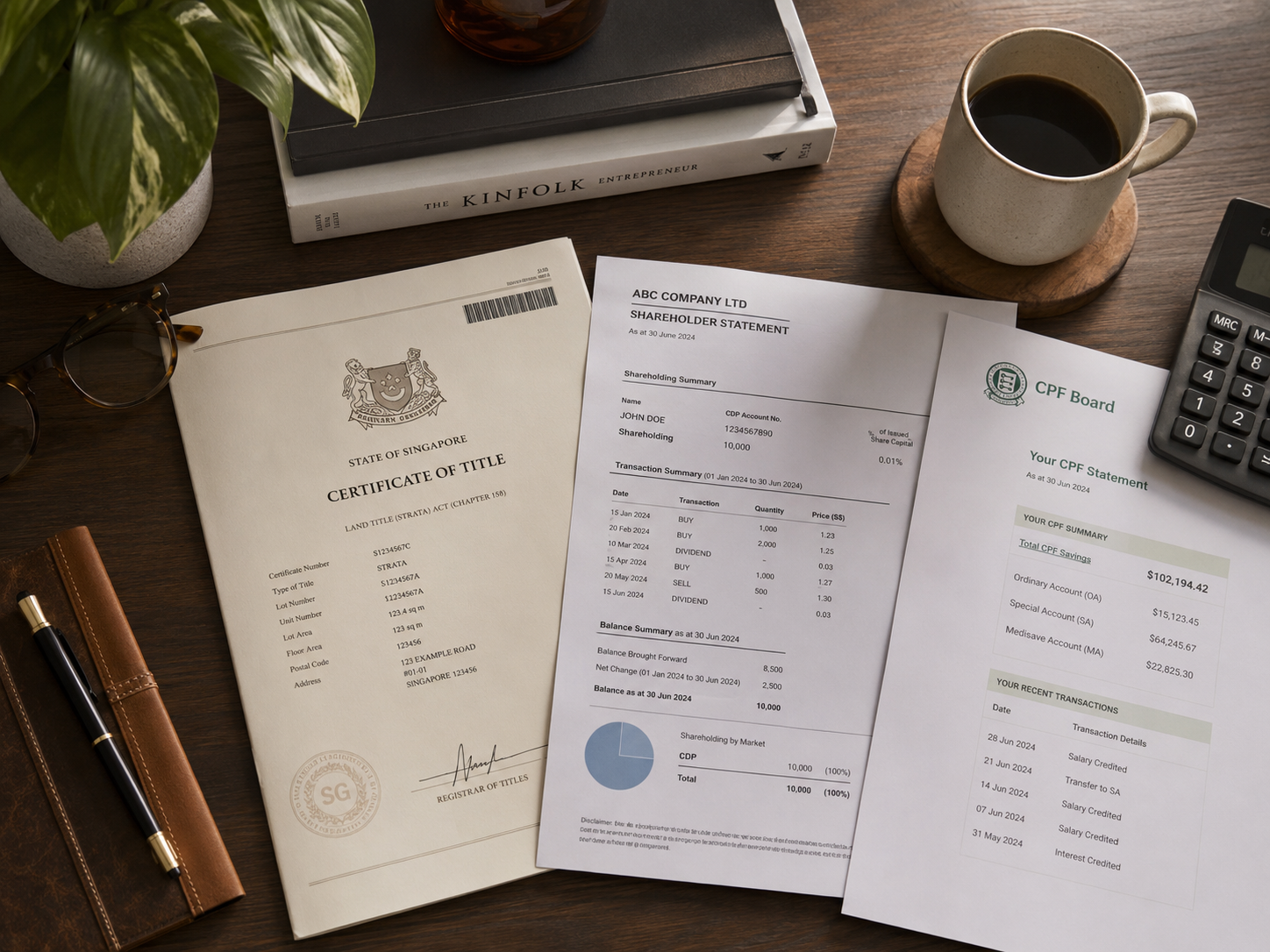
Ask most Singaporeans with investable assets to describe their financial position and a pattern emerges quickly. A property, or two. A portfolio weighted toward Singapore-listed stocks — banks, REITs, a few familiar names. Equity in a business built over years, representing on paper the largest single line on the balance sheet. Central Provident Fund (CPF) savings sitting in the background.
Each of these feels like a sensible, grounded decision. The property is tangible. The SGX stocks are companies you understand, priced in your currency, paying dividends you can plan around. The business is something you built. The CPF is the government’s promise.
What this picture actually describes, in most cases, is significant concentration. Not in one stock, but in one market, one asset class, one economy, and in many cases one company — the business. And concentration of this kind carries a risk that is easy to overlook precisely because each individual decision felt reasonable when it was made.
Why Singapore specifically
Concentration risk exists everywhere, but Singapore has a particular set of conditions that make it especially common among business owners and professionals.
Property is the default. For many families, the instinct to channel surplus wealth into a second property is close to automatic. Singapore property has performed well over long periods, it is familiar, it is financeable, and it feels more real than an investment account. The result is that a disproportionate share of net worth ends up in an asset class that is illiquid, concentrated in a single city-state, and heavily correlated with the local economy.
Home bias compounds it. Singapore equities represent just 0.4% of global equity indices, yet on average Singaporean investors hold 39% of their portfolio in local stocks. The banks, the large REITs, the blue chips — these are companies that feel known and understandable in ways that overseas equities don’t. That familiarity is real. The safety it implies is partly an illusion. A portfolio weighted heavily toward SGX-listed equities carries significant single-market and single-currency exposure, and access to only a narrow slice of global growth.
For business owners, the concentration problem is most acute. The business is often the primary asset and the primary income source simultaneously. Personal wealth and professional risk are not just correlated — they are the same thing. A business downturn, a key client loss, or an industry disruption hits the income statement and the balance sheet at the same time. A personal investment portfolio that mirrors the same sector or market amplifies that exposure rather than absorbing it.
What concentration risk actually costs
The cost of concentration rarely arrives as a single dramatic event. It tends to arrive as a series of smaller constraints that accumulate over time.
Liquidity is the first. A net worth that is largely in property and unlisted business equity looks substantial until the moment cash is needed quickly — for an opportunity, a family obligation, or a period of business stress. What felt like wealth turns out to be wealth that cannot be accessed without selling something, which is rarely the right moment to sell.
Correlation is the second. When business income, property values, and listed equity holdings all move with the same underlying economy, a downturn hits everything simultaneously. Diversification is supposed to prevent this — assets that move differently from each other, so that a loss in one area is partially offset by stability elsewhere. A concentrated portfolio in a single market offers very little of this protection precisely when it is most needed.
Optionality is the third and most underappreciated. Concentration constrains future decisions. The business owner who wants to step back in five years, the professional who wants to fund a significant transition, the family that wants to give meaningfully — all of these require capital that is accessible and not hostage to market timing, property cycles, or business performance.
How a wealth adviser approaches this
The standard answer to concentration risk is global diversification — sell the local holdings, buy a world index fund. It is not wrong. It is also not the whole answer, and for most people it is not the right place to start.
Where we start is with a complete picture of what you actually own and what each part of it is doing. Because the right moves depend entirely on the nature of the concentration. Selling down an SGX position is a different conversation from reducing exposure to a business you still run. Deciding what to do with a second property involves different questions from managing a concentrated equity holding. Treating them all the same way is how well-intentioned advice produces the wrong outcome.
For most of the clients we work with, the real work is sequencing. What needs to happen first, in what order, and at what pace — bearing in mind that some decisions have tax and timing implications that make rushing them costly, and others have emotional weight that makes forcing them counterproductive.
The goal is not a perfectly diversified textbook portfolio. It is a financial position that is resilient enough to absorb a bad year, flexible enough to fund the decisions that matter, and deliberate enough that you understand what you own and why. Getting there is rarely a single transaction. It is a process, and the quality of that process depends on someone understanding the full picture of your life, not just your investment account.
That is the conversation worth having before the constraints become visible.
We’d welcome a conversation
When you’re ready to take a complete look at what your portfolio is actually exposed to, we’d be glad to sit down with you. Our Discovery Meeting is where that begins — a full picture of your assets, your concentration, and what a more resilient position looks like for your specific situation and life.